
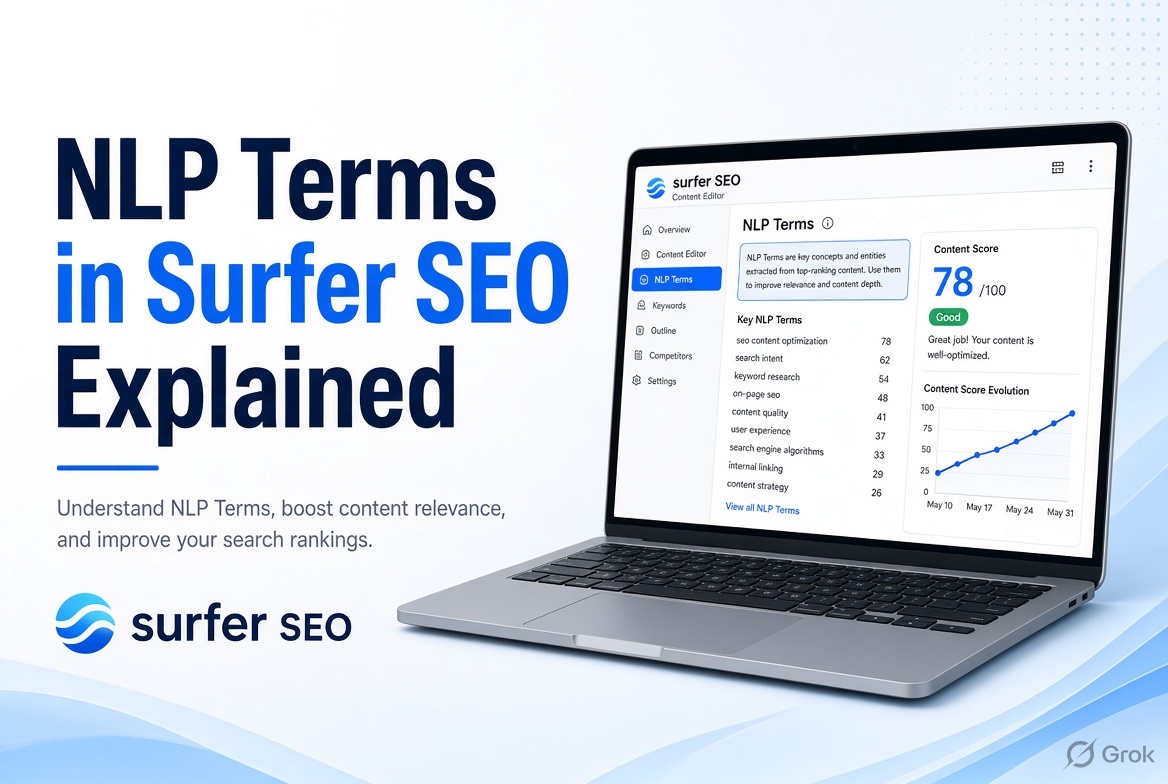
After testing content optimization tools across multiple client sites, one element consistently improved relevance scores: NLP terms inside Surfer SEO. These terms go far beyond basic keywords. They represent the entities, concepts, and semantic relationships that Google’s natural language systems associate with a topic.
Understanding NLP Terms in Practical Terms
NLP stands for Natural Language Processing. Google uses advanced NLP models to understand meaning rather than matching exact word strings. Surfer SEO reverse-engineers the top-ranking pages for your target keyword and extracts the most important NLP terms and entities those pages share.
These can include related concepts, attributes, tools, processes, or longer phrases that signal complete topic coverage. For instance, an article about “on-page SEO” might surface NLP terms such as “search intent alignment,” “entity salience,” “content depth,” and “semantic relationships.”
The difference is significant. Traditional keyword tools focus on search volume. NLP terms focus on the language patterns Google already rewards.
Why These Terms Influence Rankings
Modern ranking systems evaluate how thoroughly a page covers a topic. When your content naturally includes the same entities and concepts found across high-ranking pages, it demonstrates stronger topical understanding. This supports better relevance matching and helps satisfy user intent more completely.
In real campaigns, pages that thoughtfully incorporate missing high-relevance NLP terms often show improved Content Scores in Surfer and stronger alignment with competing results. The goal is never forced insertion. The goal is genuine coverage that feels natural to readers while closing semantic gaps competitors may have left open.
This process also strengthens EEAT signals. Accurate use of entities and related concepts makes content appear more expert and trustworthy. Readers find clearer answers, and search engines receive stronger contextual signals.
How to Apply NLP Terms Effectively
Open any document in the Surfer Content Editor and review the NLP terms panel. Prioritize higher-relevance terms and integrate them into headings, explanations, and examples only where they improve clarity. Skip low-value or forced terms.
Combine this approach with original insights, first-hand observations, and unique examples. NLP terms provide the structural map; your expertise supplies the value that ranking pages increasingly need.
For a complete hands-on evaluation of the platform, including Content Editor performance and real campaign results, read this detailed Surfer SEO Review.
Key Takeaway
NLP terms help your content speak the same semantic language as the pages Google already ranks. Used correctly, they improve topical completeness and ranking potential without outdated keyword-stuffing tactics. In 2026, the winning combination remains clear: strong semantic coverage plus genuine expertise and user value.